
When you first join the survival community, you hear a lot about bugging out, but for most people in most survival situations, retreating is a better option.
Bugging in is the act of fortifying your home and having all of the required supplies on hand to live for an extended period of time.
With most SHTF scenarios, staying at home is considerably more useful than packing your belongings and heading off somewhere. You must be ready for this to work.
Let’s begin with the basics of bugging in.
You need to know how many people will join in with you and what they can do.
Some members of your group may be less capable than others. They might be more needy, for example, as an infant or a tiny child, or an elderly or disabled family member.
So, it’s a good idea to make a list of these individuals, their ages, and their skill levels.
It’s also crucial to think about where you live, as well as the types of crises or catastrophes that may affect you. Of course, no one is immune from a pandemic or nuclear war.
Even if you live in an earthquake-prone area, or a hurricane or ice storm zone, you will want to be prepared for the unexpected. Whether it’s pandemics or nuclear strikes that affect your community or other widespread catastrophes, where you reside will matter.
Do you reside in, near, or work in a major city or an army base? It’s vital to think about the aforementioned things. After you’ve considered everything, you can start thinking about how you’ll get ready for bug out.
For many people, the option of fleeing home is more appealing and safe than staying put. There are several reasons why it’s more likely and safe to bug out in these cases – aka “bug out.”
Here are a few examples of those times.
To begin, you must first determine when it is appropriate to bug in. nSecond, like with bugging out, you must decide when it is safe to bug in.
Here are a few scenarios to consider:
When you are on the road during an emergency, you become a more attractive target, especially if you have kids. You don’t know who or what you’re stepping into, which makes everything stressful.

The most essential aspect of covert operations is to have a strategy in place for protection. People rarely live on high alert 24 hours a day, 365 days a year in a protected location. That implies there will be work to do when SHTF. You must determine your priorities and ensure that everyone in your family knows what to do if the situation arises.
Furthermore, you must practice this exercise on a daily basis to ensure that everyone is prepared to bug out.
One of the most essential aspects of burglar protection is to ensure that your house is safe. Looters or other intruders may break in, so you must build several levels of security for your property.
With these levels of protection in place, you and your family will have a hard time being harmed.

Staying at home is often simpler than packing up and heading for the hills, since you at least have a shelter ready – especially if you have an underground bunker or storm enclosure.
Make sure you have enough water on hand. You’ll need one gallon per person each day. Plan to store at least a week’s worth of water, but you can never have too much.
Heat is important. If it’s cold outside, how will you keep your home warm? A generator or a wood-burning stove may be necessary if the electricity goes out. Propane in confined areas can be dangerous. Decide how you’ll acquire more water. Is there a nearby spring or are you able to establish a water collection method?
Stock up on nonperishable items. You do have more alternatives, such as canned goods and other long-lasting foods, since you’re bugging in. Comfort supplies for your family may be kept.
Prepare for security. Have boards and weapons if you want to secure your home, as well as other necessities.
Are you safe in your own home? 5 mistakes we all make…
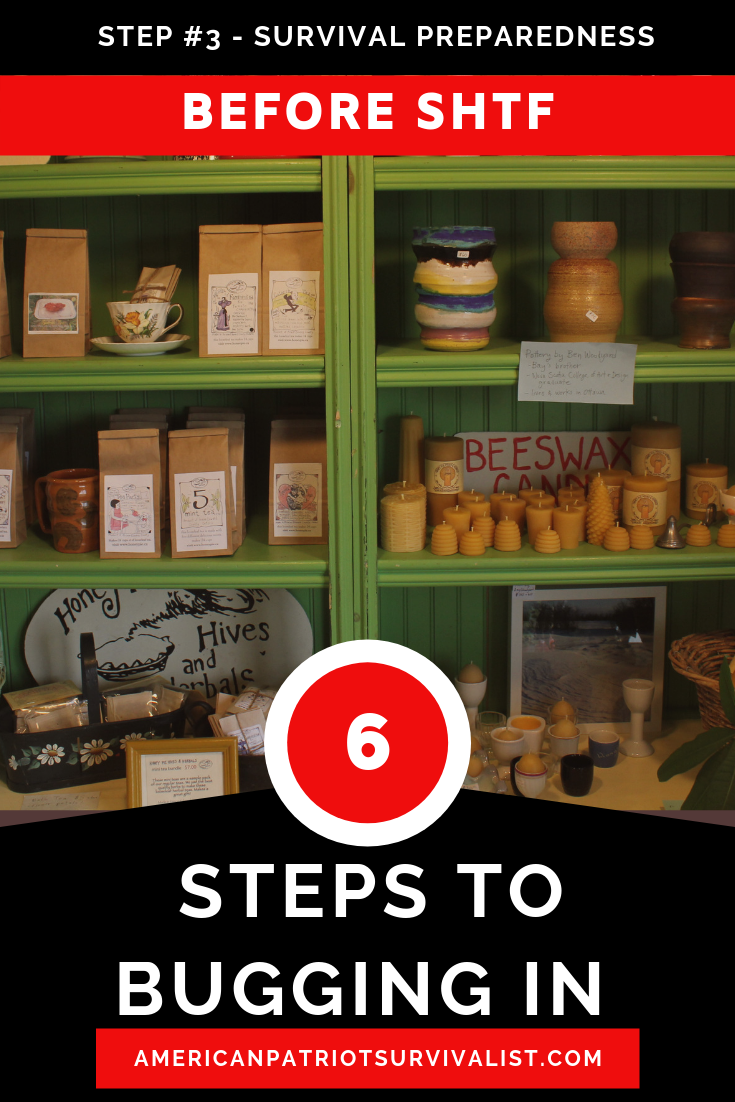
Food is always a concern when it comes to survival situations. You can hunt, fish, or find food, but having meals on hand for bug-in or bug-out is an even better alternative. And finding something that has high calories, vitamins, and salt while being inexpensive might be difficult.
Prepare to live without electricity, therefore frozen foods are out of the question. Canned foods can survive a long time, but they aren’t ideal. Dried goods are your best bet for keeping things going for many months. Jerky, hardtack, pemmican, and other salted or dried or dehydrated items are included here
Dried pasta is useful, and all grains and beans are good if they are kept free of insects. MREs are fine, but they’re expensive for long-term survival.
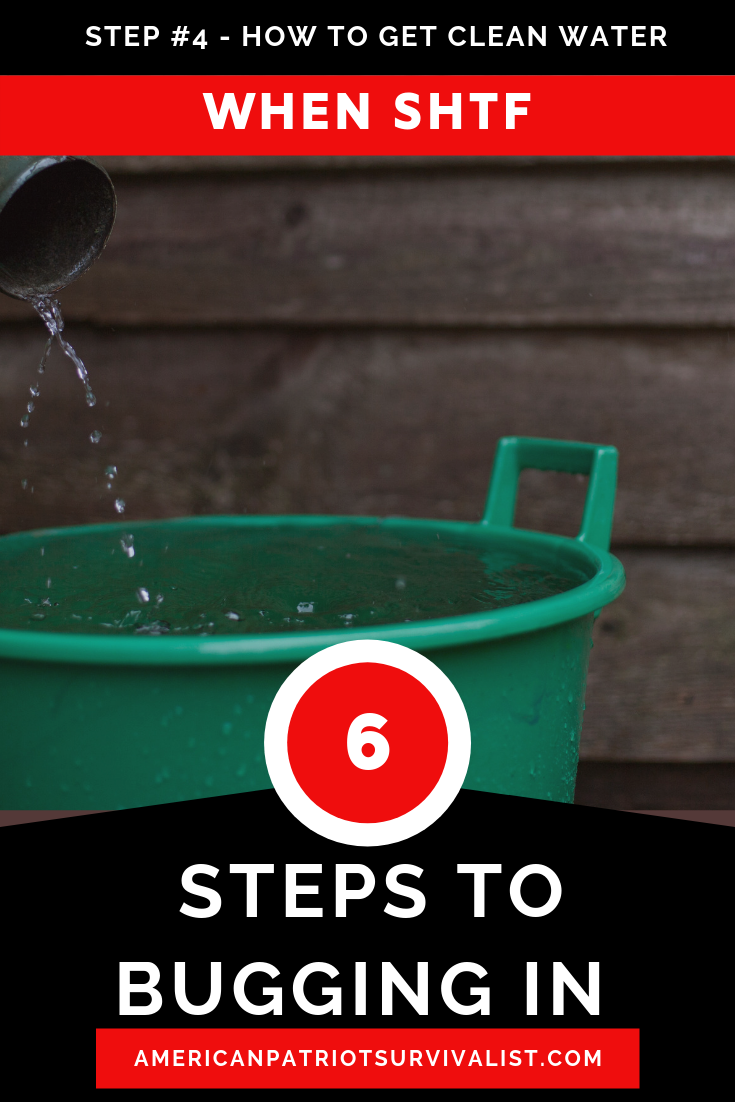
If the pumps that move the water are shut down, it might be tough to supply water to your house.
Both a well and a pond for water are available to us, which is fantastic. Water collection systems are an excellent method to maintain a constant supply of drinkable water. If you must go looking for drinking water, you should have the necessary equipment as well.
You may purify water from any stream or pond with a decent filter, boiling, or iodine tablets. Remember that you can survive only three days without water.
Related post: 17 ways to get clean drinking water
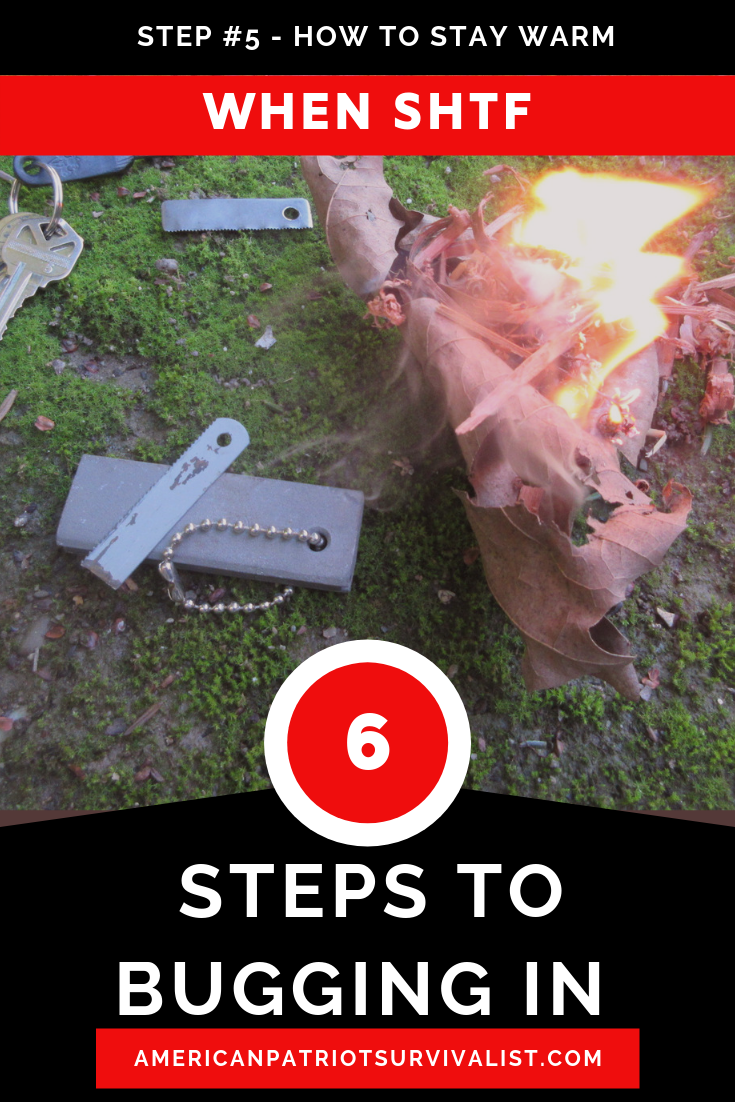
If you’re living in a cold environment, you’ll need to stay warm. Fire is always an option, but the house may catch fire and carbon monoxide poisoning might occur.
You should have lighters and Ferro rods in addition to other fire-starting options. Furthermore, having a sufficient quantity of blankets might make a significant difference. Wool blankets and emergency blankets are the finest choices.
Wool can keep you warm even when wet, and emergency blankets reflect 90% of your body heat back to you.
Communication is an important issue to consider when subterfuge. Even when you are at home, you must be aware of what’s going on in the world. If there is still electricity, keep an eye on the local and regional news.
Should the power go out, emergency announcements may still be issued, and you’ll need a radio to hear them. Make sure you have a hand-crank or solar radio in your preparedness stash.
Walkie-talkies can be used for short-range contact between members of your group. Have a HAM radio so that you may intercept communications from other sources. Getting your HAM radio license is ideal, so you can communicate via Morse code.
However, even if you aren’t authorized, you can still eavesdrop and learn what’s going on.
Have another way to communicate. Even if you’re bugging in, your team could get separated. This might include predetermined locations where you may leave messages for one another as part of a strategic plan.
It may also include a method of codes that you can use to communicate without being intercepted or understood by others.
You must be ready to bug out at a moment’s notice, no matter how much you intend to stay. In a metropolis, things can change rapidly. Lawlessness and gangs may take control, or epidemics and unsanitary circumstances could grow overwhelming, making it safer to leave the city.
Even if you are camping in your rural area, you may never know when you will be overwhelmed and unable to defend your home. As a result, always be prepared to depart on short notice. Every person in your family/group should have a bug out bag ready and waiting.
You have the ability to get out of Dodge as swiftly and safely as possible if you need to. This implies you should have a place in mind when leaving. Even if you don’t have a friend’s house, family member who is expecting you, or another bug-out location ready, pick your destination carefully.
A unique location or a national park in the area is an excellent idea. Now it’s time to get down to business.
Here is a …
In the next 20 seconds you’re going to discover a very common misconception about surviving a disaster millions of people simply don’t know.
Not only will you know more than most people on the planet when it comes to crisis survival… but you’ll also improve your chances of surviving considerably!
You’ll instantly know how to take the simple measures that will enable you to confidently overcome a typical survival scenario that could kill you in minutes once you learn this information.
Curious what this fact might be?
Here it is: Despite what most people think, the first pieces of survival gear you should have aren’t about food or water! That’s correct. Food and water are not nearly as crucial as most people believe.
This is due to the fact that you can go 2-3 days without water and 1-3 weeks without food before dying.
The most deadly aspect of this season, and what kills more people each year, is exposure to the elements. Exposure will cause your life to be hanging by a thread within 15 minutes if you aren’t prepared to deal with it.
It’s because exposure to weather conditions causes far more fatalities than thirst, and starvation combined that we wanted to introduce you to one of the most useful and most underrated survival tools on the planet.
